Lighting and seating are the twin pillars of a successful private cinema. When they work in concert, the space feels intimate, the screen appears vivid, and the audience enjoys prolonged comfort. This guide outlines the principles that allow architects, interior designers and AV integrators to plan lighting that respects sightlines, enhances the upholstery, and remains flexible for varied programming. By applying a layered approach and considering control strategies early, you can deliver a theatre that feels bespoke without compromising technical performance.
1. Understanding Light Layers in a Home Cinema
A well-designed cinema employs three light layers: ambient, task and accent. Ambient light provides a base level that prevents the eye from being overstimulated when the screen is dark, while still allowing safe movement. Task lighting is focused on functional needs such as reading programmes or operating recline controls. Accent lighting highlights architectural features and the seating itself, adding depth and visual interest.
Each layer should be independently dimmable, enabling the designer to tailor the overall luminance to the content being shown. The key is to keep the combined light level low enough to preserve black levels on the screen, yet sufficient to avoid eye strain during intermissions. Mapping these layers early in the design process avoids later compromises.
2. Seat Positioning Relative to Ambient Sources
The placement of seats determines how ambient light interacts with the viewer's line of sight. Seats positioned too close to wall-mounted fixtures can create glare on the screen or cause uneven illumination across the row. By offsetting seating rows from direct light paths and using indirect fixtures - such as cove lighting or concealed LED strips - the ambient glow becomes diffuse and non-intrusive.
When planning the layout, consider the height of the lighting source relative to the seat back. Evaluate each fixture from seated and reclined eye positions. A source that looks concealed when standing may become directly visible when a viewer leans back; neither mounting height nor a concealed label alone guarantees freedom from glare. Modelling software can simulate these interactions, allowing designers to fine-tune fixture placement before installation.
3. Task Lighting for Recline and Controls
Reclining mechanisms, USB ports, and remote controls require subtle illumination that does not disturb the viewing experience. Low-output, directional LEDs integrated into the seat armrest or side panels can provide just enough light for operation without spilling onto the screen. Where the selected equipment supports it, coordinate these fixtures with the room controls. Confirm the actual lighting options, dimming behaviour and control interface with the seating supplier and AV integrator before including them in a lighting scene.
Warm white light can suit a residential interior, but colour temperature alone does not determine comfort. Test the fixture's brightness, shielding and reflected light from the occupied seat before approving the final specification. Designers should also specify a tactile switch or touch-sensitive surface that can be activated without looking, preserving the immersive quality of the cinema.
4. Accent Lighting to Enhance Seating Architecture
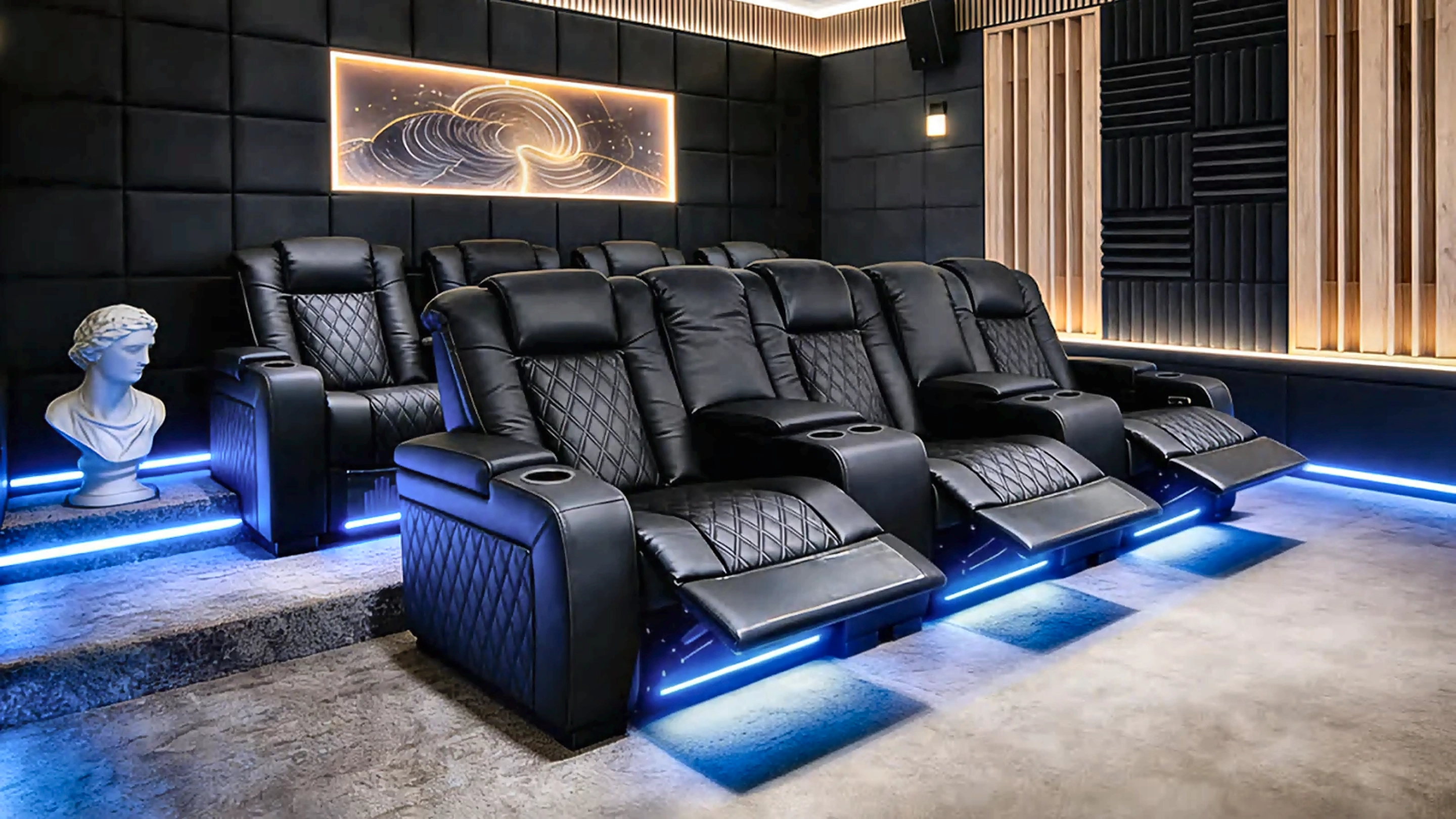
Accent lighting can transform the perception of seating forms, including the quilted panels visible on CAVENRO Noir Row. A controlled wash across a wall or a shielded row marker can reveal texture without placing a bright source in the viewer's field of view. Do not assume decorative lighting or illuminated stitching is a standard seating feature. This technique also helps delineate rows, guiding patrons to their places intuitively.
Set accent-light output through an on-site trial with the chosen screen and finished materials. A single lumens-per-metre limit cannot describe the result: fixture optics, distance, surface reflectance and dimming performance all affect the light reaching the screen. Programmable colour palettes allow designers to match the ambience to the room's décor or to shift the mood for special events, adding a layer of customisation that high-end clients appreciate.
5. Dynamic Lighting Controls and Zoning
Modern cinema spaces benefit from zone-based control, where each row or section can be dimmed independently. This flexibility supports staggered entry and exit, reduces the need for bright aisle lights, and allows for personalised lighting scenes - such as a brighter pre-show environment that fades seamlessly once the feature starts. A unified user experience requires verified compatibility between the lighting drivers, control system and any seat-integrated lighting. Ask the integrator to demonstrate the proposed sequence rather than assuming that products will communicate.
Create zones around distinct tasks and architectural areas, rather than automatically giving every seating row a separate zone. Keep cleaning light independent from decorative light, and consider a simple pause scene that helps guests find controls and drinks. Detailed schematics should map each lighting zone to its corresponding seat row, simplifying future adjustments or upgrades.
6. Material Choices and Light Reflectivity
The reflectance of seat upholstery influences how ambient light is perceived. Dark, matte fabrics absorb more light, reducing glare but potentially making the space feel closed if ambient levels are too low. Conversely, lighter or subtly reflective finishes can bounce light, softening shadows but risking unwanted screen wash. Balancing fabric tone with lighting intensity is essential for visual comfort.
When specifying materials, request sample swatches and test them under the intended lighting conditions. This practice helps confirm that the chosen finish works harmoniously with both the ambient wash and the accent fixtures, ensuring the final room feels cohesive rather than disjointed.
7. Integrating CAVENRO's Noir Row Seating
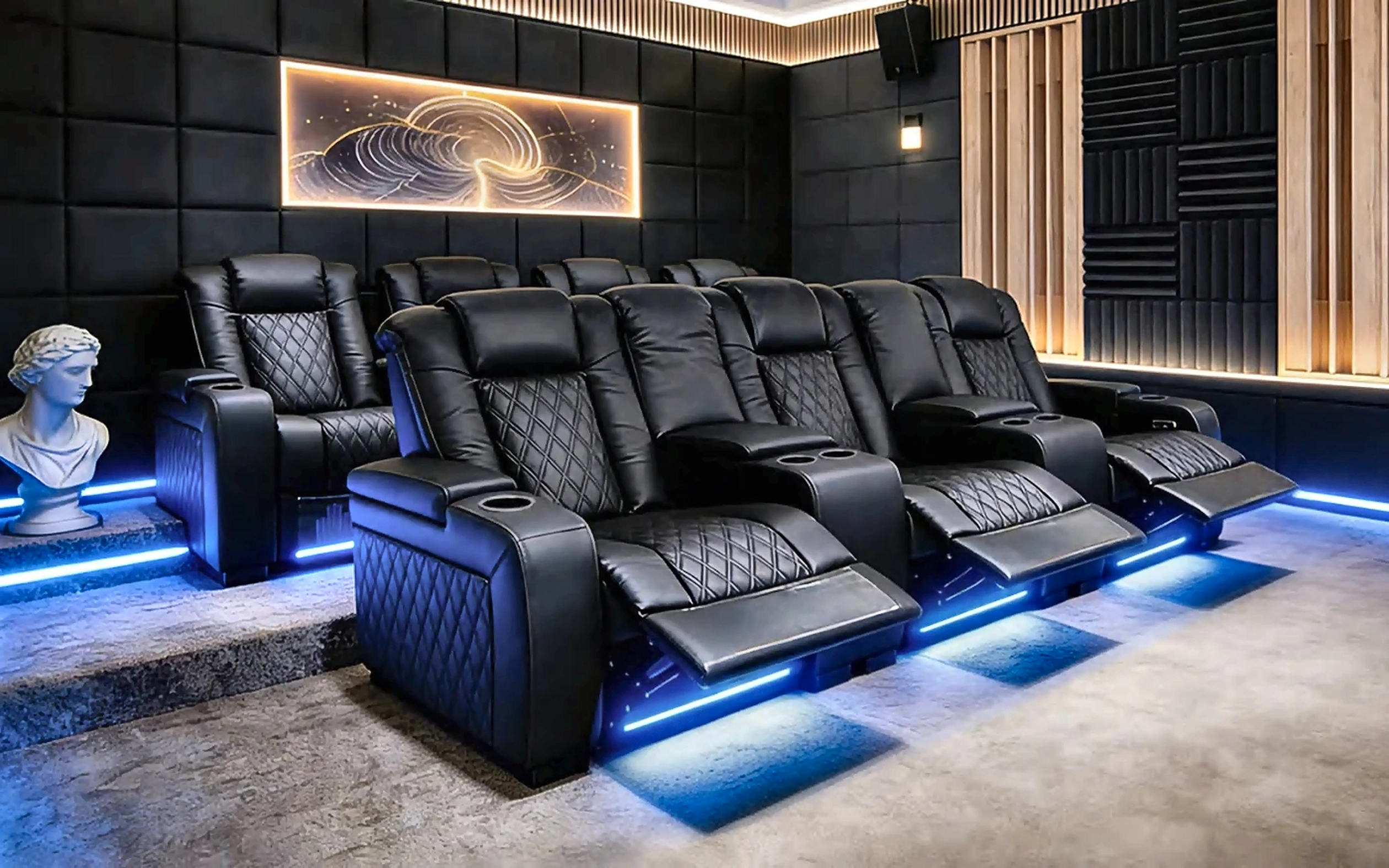
The existing Noir Row imagery shows black seating, diamond-patterned upholstery panels and illuminated lower edges within a tiered room. These are useful visual references for discussing contrast and the relationship between warm architectural light and cooler accents. The image is not a photometric specification or a guarantee of the functions supplied with every order.
Review the actual seat dimensions, recline envelope and proposed lighting options alongside the reflected ceiling plan. Noir Row's product page describes powered functions, utility and lighting as project-specified options. Confirm the approved configuration in writing. A full-size mock-up of one seat position, wall finish and fixture is more useful than assuming that an attractive reference photograph will reproduce the same lighting conditions.
8. Testing, Calibration and Client Handover
Once the lighting and seating are installed, a thorough calibration session is vital. Measure screen luminance, ambient light levels, and reflectance off the upholstery to confirm that the design intent is met. Adjust dimming curves and zone boundaries as needed, documenting the settings for future reference. This data-driven approach reassures clients that performance standards have been achieved.
During handover, provide the client with a concise lighting manual that outlines operation, scene presets, and maintenance instructions for any task lights included in the approved specification. Offering a brief training session ensures that the homeowner or facility manager can confidently manage the system, preserving the theatre's premium experience for years to come.
Frequently asked questions
How many lighting zones are advisable for a typical private cinema?
There is no fixed zone count for every cinema. Separate functions that need different settings, such as entry, circulation, decorative accents and cleaning. Then test whether the homeowner can operate the resulting scenes easily. Add zones only when they provide a useful, independently controlled function.
Can I use colour-changing LEDs without affecting screen black levels?
Coloured lighting may still spill onto the screen or reflect from finishes. Assess it with the final screen, room finishes and seating installed, using dark scenes as well as brighter content. Keep decorative colour scenes separate from the main film-viewing scene when needed.
What is the best way to hide wiring for seat-integrated task lights?
Use only cable routes and attachment points approved by the seating and lighting suppliers. Coordinate accessible power supplies and service connections with a qualified installer, keeping cables clear of moving recliner parts. Do not alter upholstery, frames or electrical components without the manufacturer's agreement.
When should the lighting scenes be reviewed?
Review them at commissioning and after changes to the screen, projector, fixtures, finishes or seating configuration. Keep a record of approved settings and equipment details. Follow each manufacturer's maintenance instructions rather than assuming that every residential installation needs the same recalibration interval.
For a broader explanation of lighting layers and daylight control, see Lutron's guide to layered window treatments. Its ambient, task and accent framework is a useful starting point; the cinema's final settings still require a room-specific review.
Related CAVENRO references
Need a project-specific seating proposal?
Share the room drawings, configuration, materials, required functions and destination. CAVENRO can review the brief before quotation.
Start a Project