When a private cinema moves beyond off‑the‑shelf solutions, the upholstery becomes a defining visual and tactile element. Selecting the right fabric, leather or woven material, and confirming its performance under low‑light, high‑use conditions, requires a disciplined sampling process. This guide walks designers through the stages of material research, colour calibration, sample construction, and iterative review, ensuring that the final seat not only complements the surrounding warm wood accents but also meets acoustic, durability and aesthetic expectations. By standardising the workflow, you reduce risk, streamline client sign‑off and preserve the project’s luxury intent.
1. Defining the Design Intent and Material Palette
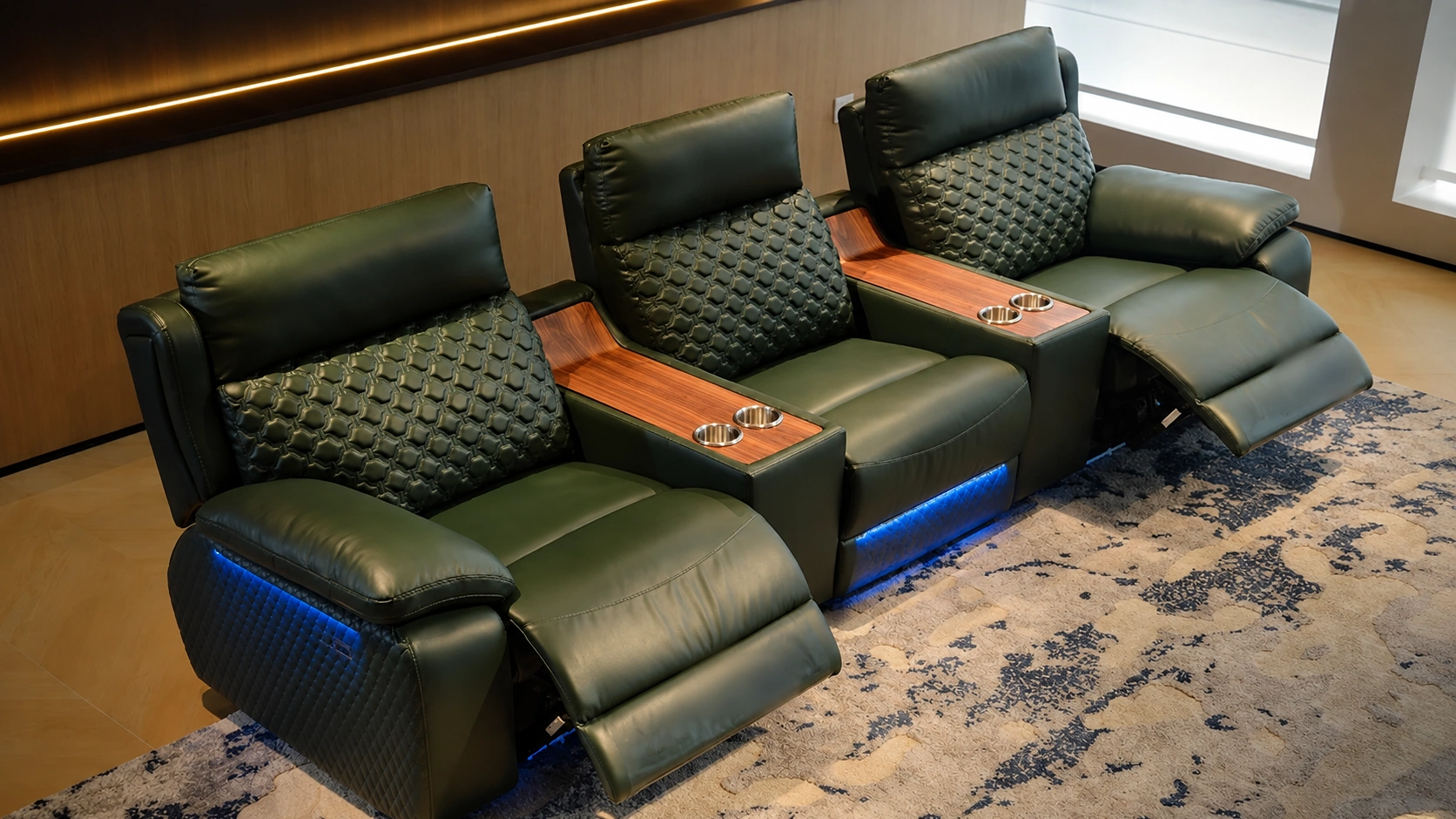
The first step is to translate the client’s narrative into a concrete design brief. Mood boards should juxtapose the intended upholstery with the warm wood accents that often frame a private cinema, highlighting texture, tone and scale. This visual language guides the selection of fabrics or leathers that will reinforce the desired ambience while respecting the overall architectural language.
From there, categorize potential materials by performance criteria—breathability, wear resistance, fire rating, and acoustic contribution. Luxury projects frequently balance natural fibres with engineered textiles to achieve a refined look without compromising durability. Documenting these parameters early prevents later conflicts between aesthetic aspirations and technical requirements.
2. Colour Management and Light Interaction
Cinema lighting, whether recessed LEDs or wall‑wash fixtures, dramatically alters colour perception. A swatch that appears muted under showroom illumination can become saturated in a darkened room. Produce calibrated colour cards and view them under the exact lighting scheme planned for the space to verify hue stability before committing to a full‑scale sample.
When warm wood tones dominate the room, the upholstery should either harmonise or provide a measured contrast. Use a physical mock‑up that incorporates a short length of the chosen wood finish alongside the upholstery swatch; this side‑by‑side test reveals subtle undertones that digital renderings often miss, ensuring a cohesive visual hierarchy.
3. Selecting the Right Upholstery Substrate
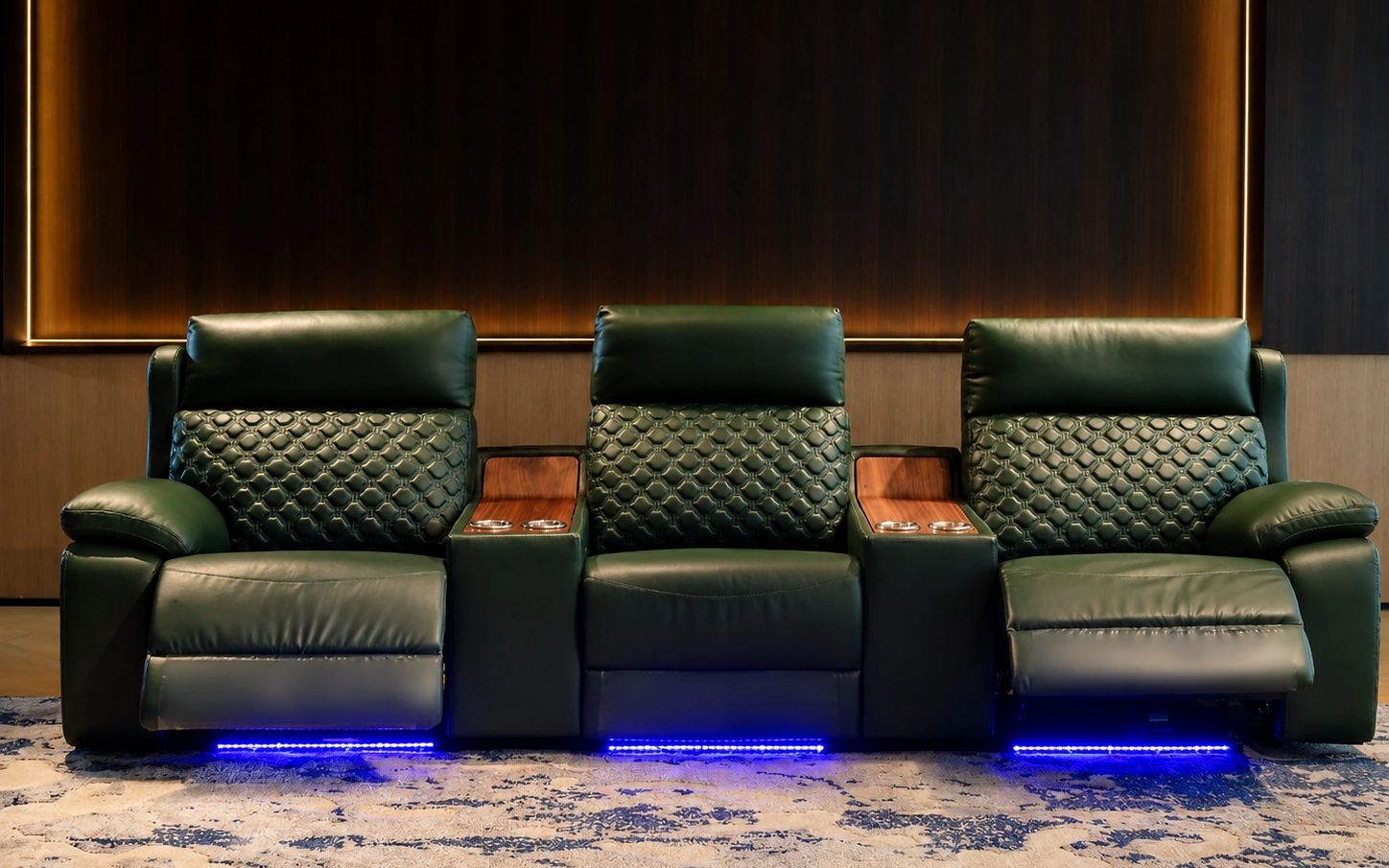
Underlying support structures—high‑density foam, pocket springs or hybrid systems—directly affect comfort and longevity. Choose a substrate that maintains shape after repeated recline cycles while offering a gentle sink that enhances the cinematic experience. The substrate’s resilience also influences how the covering material drapes over the seat frame.
Covering options range from full‑grain leather to performance‑grade woven textiles. Consider tactile qualities, maintenance regimes, and sustainability credentials. For projects that prioritise a natural aesthetic, vegetable‑tanned leather may complement walnut or cherry wood accents, whereas technical fabrics can provide superior stain resistance without sacrificing elegance.
4. Creating a Physical Sample: From Sketch to Prototype
Translate the approved design into a pattern that reflects the exact dimensions of the seat shell. Cut a prototype using the final upholstery material, ensuring seam allowances and stitching techniques match production specifications. This prototype should be built at full scale to expose any hidden distortions caused by curvature or arm‑rest geometry.
Place the prototype within the intended room layout, ideally on a temporary riser that mimics the final installation height. Observe how the upholstery interacts with surrounding elements—lighting, wood trim, and acoustic panels. Adjustments made at this stage are far less costly than re‑working a full production run.
5. Testing for Durability and Acoustic Compatibility
Subject the sample to a series of durability tests that simulate real‑world use: abrasion cycles, stain resistance trials, and fire‑safety assessments in line with local regulations. Record the outcomes and compare them against the project’s performance thresholds. Any material that fails to meet these benchmarks should be reconsidered before final approval.
Upholstery also contributes to the acoustic character of a cinema. Soft fabrics absorb mid‑range frequencies, reducing echo without compromising dialogue clarity. Conduct a brief acoustic measurement with the sample installed, noting any changes to reverberation time. Align these findings with the overall acoustic strategy, especially when warm wood surfaces dominate the space.
6. Iterative Review and Client Sign‑off
Present the physical prototype alongside digital renderings and material data sheets. Facilitate a structured feedback session that captures aesthetic impressions, comfort expectations, and any concerns about maintenance. Document each revision, creating a clear audit trail that demonstrates how the final specification evolved from the original brief.
Once consensus is reached, compile a comprehensive specification package that includes fabric codes, colour references, fire‑rating certificates and a signed client approval. This package becomes the contractual basis for manufacturing, ensuring that every seat produced adheres to the agreed‑upon standards.
7. Coordinating with AV Integrators and Lighting Designers
Cinema seating does not exist in isolation; cable routing, speaker placement and ambient lighting all intersect with the upholstery. Early collaboration with AV integrators guarantees that power and data conduits are concealed within the seat frame without compromising the visual integrity of the upholstery.
Similarly, lighting designers must confirm that any seat‑integrated illumination—such as subtle back‑lit trims—does not cause colour shift in the fabric. Verify that the chosen material tolerates heat output from LED strips and that any reflective elements are compatible with the overall lighting design.
8. Finalising Production and Quality Assurance
With the approved prototype in hand, manufacturers should produce a short pre‑run batch to verify colour consistency, stitching accuracy and dimensional tolerances. Compare these units against the reference sample, noting any variance that could affect the visual continuity across a row of seats.
During installation, conduct a final on‑site inspection to confirm that each seat matches the approved sample and integrates seamlessly with the warm wood accents that characterise CAVENRO’s private‑cinema collections. Document any deviations and address them before the project is signed off, preserving the intended luxury experience.
Frequently asked questions
How many upholstery samples are typically needed before final approval?
Most high‑end projects progress through three iterations: an initial colour and texture swatch, a full‑scale prototype built with the exact material, and a pre‑run batch that validates production consistency. The exact number can vary, but this staged approach balances thoroughness with efficiency.
Can I combine different fabrics within a single row of cinema seats?
Mixing fabrics is possible, but it requires careful coordination of colour, finish and acoustic performance. Designers should ensure that any contrast serves a deliberate visual purpose and that the differing materials share comparable durability and fire‑rating specifications to avoid regulatory complications.
What fire‑safety standards apply to custom cinema upholstery?
In most jurisdictions, upholstery for public assembly spaces must meet a recognised fire‑safety classification such as NFPA 701 or the European EN 13501‑1 rating. Materials should be tested for flame spread, smoke development and toxic emissions, and the certification documentation must be part of the final specification.
How does warm wood accenting influence the choice of upholstery colour?
Warm wood tones—such as walnut, cherry or mahogany—tend to favour upholstery colours that either echo the wood’s amber undertones or provide a measured contrast, like deep charcoal or muted teal. Sampling the upholstery alongside a short strip of the actual wood finish helps reveal subtle interactions that guide the final colour decision.
A disciplined upholstery‑sampling workflow transforms a private cinema from a functional space into a curated experience where every seat reinforces the design narrative. By defining intent, managing colour under realistic lighting, testing durability and acoustic performance, and maintaining clear communication with AV and lighting partners, designers can deliver seating that feels bespoke yet reliable. The final quality checks, anchored by a documented approval process, ensure that the finished product aligns with the luxury standards exemplified by CAVENRO’s warm‑wood‑accented cinema collections. This methodical approach reduces risk, streamlines procurement and ultimately creates a cinema environment that delights both the eye and the ear.
Related CAVENRO references
- Explore Warm wood accents, composed for private cinema.
- Explore the Cinema collection
- Read more planning guides
Need a project-specific seating proposal?
Share the room drawings, configuration, materials, required functions and destination. CAVENRO can review the brief before quotation.
Start a Project