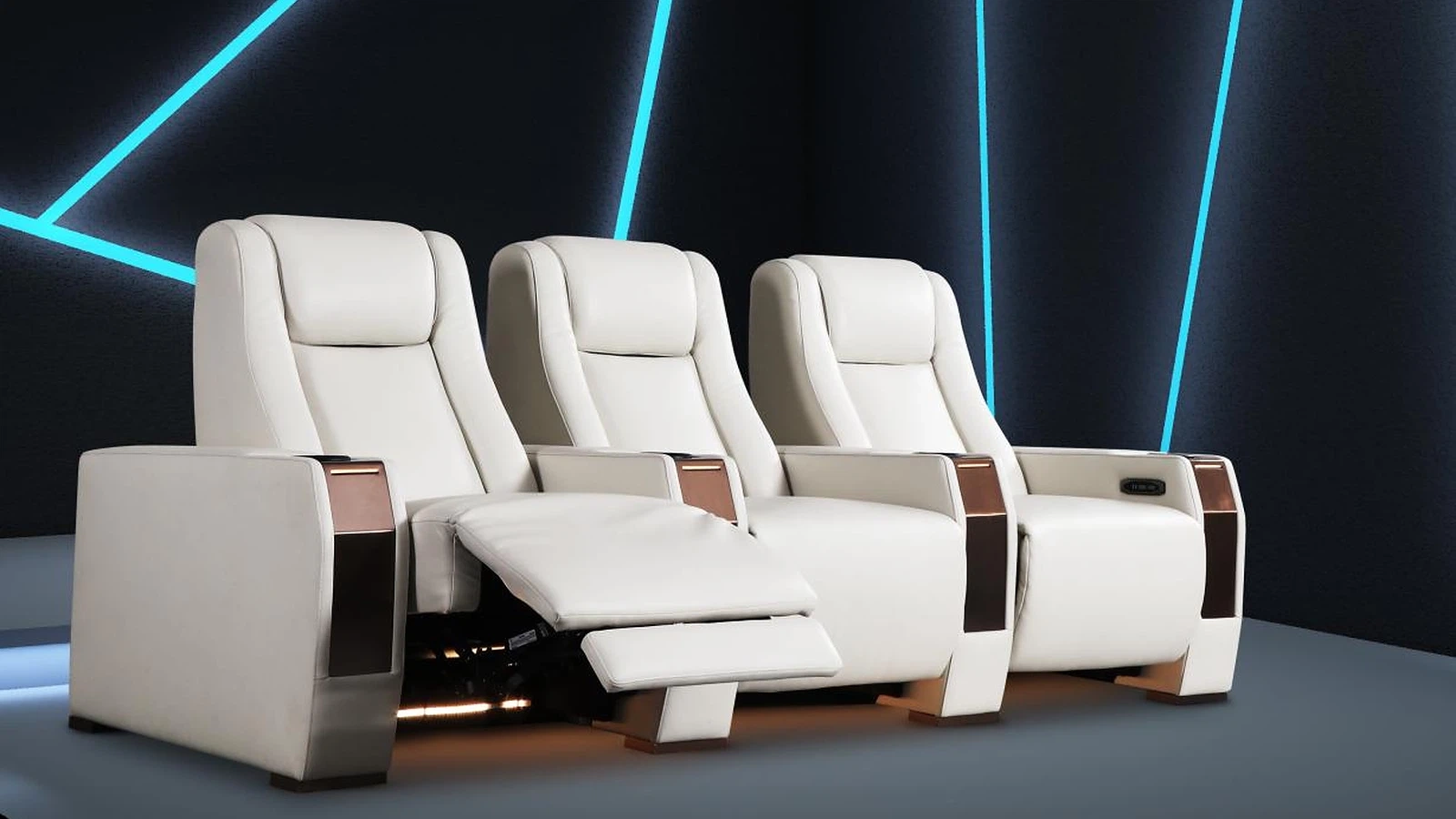
Choosing leather for a private cinema is more than a visual decision; it is a convergence of tactile experience, longevity and environmental responsibility. The material must endure repeated recline cycles, resist light‑induced fading, and complement the surrounding architecture without overwhelming it. This guide walks professionals through the essential criteria—grain structure, finish, colourfastness, comfort properties and sourcing ethics—so that the final seat feels as refined as the film it frames. The powered comfort model, composed for private cinema, serves as a practical reference point for these considerations.
1. Understanding Leather Types
Full‑grain leather retains the natural surface of the hide, showcasing unique grain patterns and offering the highest level of durability. Top‑grain leather is sanded and refinished, providing a more uniform appearance while still delivering substantial strength. Both are suitable for high‑end seating, but the choice hinges on the desired visual character and the client’s tolerance for natural markings.
Nubuck and brushed leathers present a velvety texture achieved by sanding the grain side, creating a soft hand‑feel that many luxury users appreciate. Aniline leathers are dyed with soluble pigments, preserving the hide’s natural pores and delivering deep, nuanced colours, yet they require protective finishes to guard against spills. Pigmented leathers, conversely, receive a surface coating that enhances colour consistency and resistance to wear, making them a pragmatic option for heavily used environments.
2. Assessing Durability for High‑Use Environments
In a private cinema, seats are subject to frequent weight shifts, reclining mechanisms and occasional contact with accessories such as trays or remote controls. Full‑grain and top‑grain leathers exhibit superior tensile strength and abrasion resistance, reducing the risk of surface cracking over time. When specifying, request tensile‑strength data and abrasion‑test results from the supplier to confirm suitability.
Consider the finish’s role in protecting the leather. Protective topcoats, whether polyurethane or acrylic, add a sacrificial layer that absorbs minor scratches and helps retain the leather’s integrity under repeated motion. For reclining seats, verify that the finish does not impede the movement of powered components, a factor that the powered comfort model addresses through a balanced coating system.
3. Colour Stability and Lightfastness in Cinematic Settings
Ambient lighting in a home theatre—whether LED strips, wall sconces or projection lamps—exposes leather to a spectrum of wavelengths that can accelerate fading. Aniline and natural‑tone leathers are especially vulnerable unless they are sealed with UV‑blocking finishes. Request lightfastness ratings (e.g., ASTM D 4329) to ensure the colour will remain true over years of exposure.
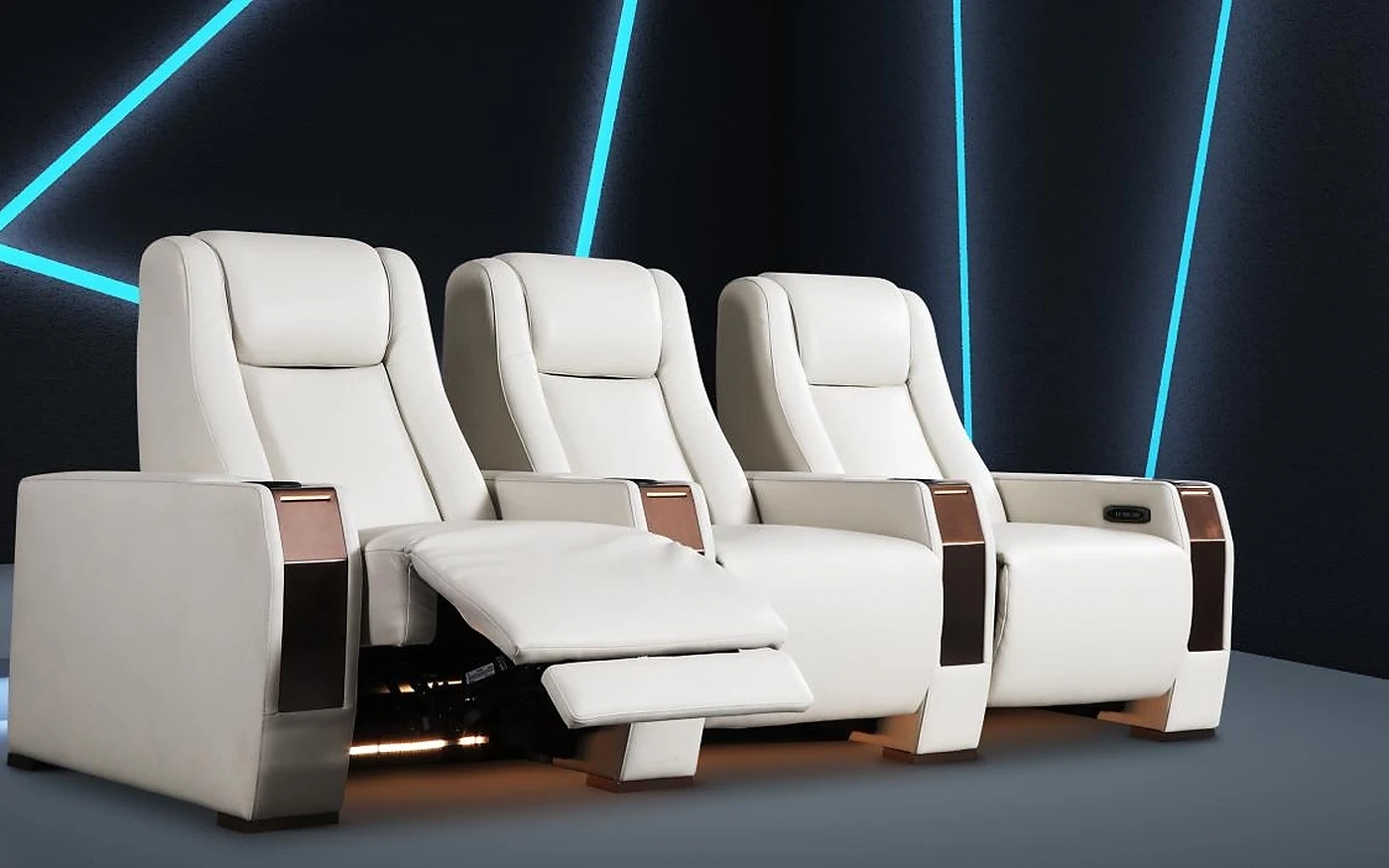
When a designer selects a colour palette, it should harmonise with the room’s lighting design. Neutral tones such as ivory, charcoal or deep mahogany tend to be forgiving, while bold hues may require additional protective layers. The ivory‑arc row example demonstrates how a light‑reflective finish can preserve brightness without compromising the leather’s natural depth.
4. Tactile Comfort and Temperature Regulation
Leather’s breathability is a key determinant of seated comfort, particularly during long viewing sessions. Full‑grain leather, with its intact pores, allows air circulation that mitigates heat buildup. In contrast, heavily pigmented surfaces can feel warmer, especially in rooms with limited ventilation. Evaluate the leather’s breathability rating and, where possible, test a sample under simulated use.
Temperature regulation can be enhanced through perforated leather or leather‑backed fabrics that incorporate moisture‑wicking layers. These technologies maintain a pleasant hand‑feel without sacrificing the luxurious appearance expected in a premium cinema. Designers should coordinate with AV integrators to ensure that any built‑in heating or cooling elements within powered seats are compatible with the chosen leather.
5. Matching Leather Finish to Interior Aesthetic
The visual language of a private cinema often blends contemporary minimalism with classic opulence. Selecting a leather finish that echoes the surrounding material palette—whether it be polished metal, rich wood or matte plaster—creates a cohesive environment. Full‑grain leathers with a natural oil finish convey timeless elegance, while high‑gloss pigmented leathers can echo modern, high‑tech surfaces.
Texture also plays a role: a subtle grain can add depth to a monochrome scheme, whereas a smooth, reflective surface may become a focal point in a more restrained setting. The ivory‑arc row layout illustrates how a restrained, light‑coloured leather can brighten a space without clashing with darker acoustic panels.
6. Integration with Powered Seating Mechanisms
Powered recliners incorporate motors, wiring and sometimes heating elements, all of which demand careful material coordination. Leather that is too stiff can impede the smooth operation of hinges, while overly soft leathers may stretch around moving parts, leading to premature wear. Choose a leather with a balanced firmness that accommodates motion without excessive deformation.
CAVENRO’s design approach often involves testing leather samples on functional prototypes to confirm that the upholstery does not interfere with motorised mechanisms. During specification, request a mock‑up of the seat with the chosen leather to verify clearances, especially where the leather folds around the recline pivot.
7. Sustainability and Ethical Sourcing Considerations
Increasingly, high‑end clients expect transparency regarding the origin of their materials. Leather sourced from certified tanneries that adhere to the Leather Working Group’s environmental standards demonstrates a commitment to reduced water usage, chemical management and waste minimisation. Verify that the supplier can provide certification documents and traceability reports.
Alternative eco‑leathers, such as vegetable‑tanned or reclaimed hides, can satisfy sustainability goals while retaining the tactile qualities of genuine leather. When specifying, discuss the lifecycle impact with the client and weigh the aesthetic trade‑offs against the environmental benefits.
8. Specification Process and Collaboration with Suppliers
A robust specification begins with a detailed brief that outlines performance criteria, aesthetic intent and maintenance expectations. Include quantitative targets—minimum tensile strength, abrasion rating, colourfastness level—and qualitative descriptors such as “soft hand‑feel” or “subtle grain”. This clarity streamlines communication with leather mills and upholstery workshops.
During the design phase, schedule material workshops with the supplier to review swatches, finishes and mock‑ups. CAVENRO recommends a collaborative review of the powered comfort prototype to ensure that the final leather selection integrates seamlessly with the seat’s engineering. Documentation of all decisions protects both the design intent and the client’s investment.
Frequently asked questions
What is the difference between aniline and pigmented leather for cinema seating?
Aniline leather is dyed with soluble pigments that penetrate the hide, preserving its natural pores and yielding deep, nuanced colours. It offers a luxurious hand‑feel but is more susceptible to staining and UV‑induced fading unless sealed with a protective topcoat. Pigmented leather, by contrast, receives a surface coating that provides uniform colour, higher resistance to spills and better lightfastness. While it may lack the subtle depth of aniline, pigmented finishes are often preferred in high‑traffic cinema environments where durability and colour stability are paramount.
How can I ensure the leather will not interfere with motorised recline mechanisms?
Select a leather that balances firmness and flexibility. A leather that is overly soft can stretch around moving parts, creating friction that strains motors, whereas an excessively stiff hide may restrict the range of motion. Request a functional prototype fitted with the chosen leather and test the full recline cycle, paying attention to any binding or audible strain. Additionally, verify that any protective finishes are thin enough not to add bulk around hinge points.
Are there sustainable leather options that still meet luxury standards?
Yes. Vegetable‑tanned leather, which uses natural tannins instead of harsh chemicals, offers a biodegradable alternative with a distinctive matte finish. Reclaimed leather, sourced from de‑constructed vintage pieces, can be re‑finished to meet contemporary luxury expectations while reducing waste. Both options can be certified through the Leather Working Group or similar bodies to demonstrate responsible sourcing. Designers should evaluate the visual and tactile qualities of these alternatives against client expectations and ensure that any finishing processes maintain durability.
What maintenance routine should be recommended for high‑end leather cinema seats?
A conservative maintenance plan extends the life of luxury leather. Begin with a soft, lint‑free cloth to remove dust after each use. For deeper cleaning, employ a pH‑neutral leather cleaner applied sparingly, followed by a conditioner that restores oils without saturating the surface. Avoid harsh solvents, abrasive tools or excessive water, as they can damage the finish. Periodic professional conditioning—typically every six to twelve months—helps preserve colour depth and flexibility, especially in environments with fluctuating temperature and humidity.
Selecting leather for a luxury home theatre is a nuanced exercise that blends performance, aesthetics and responsibility. By understanding grain structures, durability metrics, colour stability, tactile comfort and the interaction with powered mechanisms, designers can specify a material that endures both the rigours of use and the expectations of discerning clients. Collaborative workshops with suppliers, clear specification documents and a commitment to sustainable sourcing further ensure that the final seat not only looks exquisite but also aligns with contemporary values. When these principles are applied, the result is a seating experience that enhances every film, echoing the timeless elegance that CAVENRO strives to deliver.
Related CAVENRO references
- Explore Powered comfort, composed for private cinema.
- Explore the Cinema collection
- Read more planning guides
Need a project-specific seating proposal?
Share the room drawings, configuration, materials, required functions and destination. CAVENRO can review the brief before quotation.
Start a Project